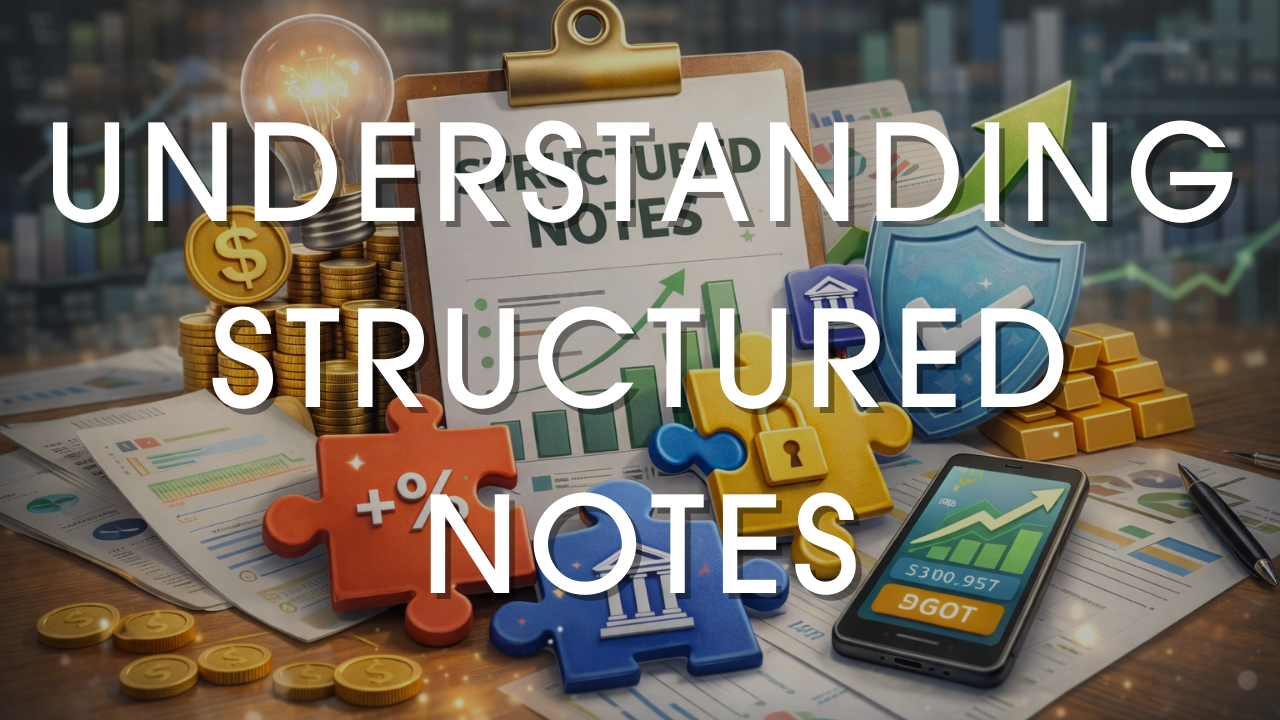
Understanding Structured Notes
When it comes to living off our assets, most of us find ourselves caught between a rock and a hard place:
- Cash feels safe, but inflation eats away at its value.
- Equities are AMAZING for building wealth growth, but their volatility makes drawing off income unpredictable.
- Bonds used to be a way to get income, but they really don’t offer you much these days.
So what if there was a way, a strategy used by the wealthy, that gives you great income returns AND capital protection?
Enter Structured Notes.
For years, this investing strategy was reserved for banks and ultra-high-net-worth investors.
But now, tools like structured notes are becoming accessible to private investors, and they could radically reshape how you think about getting income from your assets and protecting your wealth.
🎥 See This In Action
If you prefer visuals and real-world examples, or just want to hear how this works in everyday language...
👉 Watch the full session with Cashbox Global here

You’ll see how structured notes perform even in rocky markets, how the protection mechanisms work, and the income opportunities they offer, without needing to be a market expert.
And to find out more about how you can invest in Structured Notes through CashBox Global - GO HERE>>>>
What Is a Structured Note?
At its core, a structured note is a legally binding contract between you (the investor) and a major investment bank.
It clearly defines what outcomes you’ll receive based on the performance of a set of assets (called “underlyings”) and under what conditions you’ll get your capital back, plus returns.
This is not speculation.
It’s not guesswork.
It’s defined.
Structured.
Protected.
Unlike equities, which fluctuate daily, structured notes operate on set observation dates, check-in points where the bank assesses whether the conditions have been met for you to receive income, early maturity (called an auto-call), or capital repayment.
Why You’ve Likely Never Heard of These Before
Structured notes were traditionally used by large institutions and pension funds looking for better returns without taking on full market risk.
They typically required $1 million or more just to get started.
But through platforms like Cashbox Global, these notes are now accessible to individuals for as little as $10,000, while still offering defined returns (often 10–14% per year or more) and capital protection features.
The Magic Ingredients: Income, Protection, and Predictability
Structured notes use a combination of components:
- Bonds – which provide stability and capital protection features.
- Options – which link returns to how a basket of stocks or indices perform (without actually buying the stocks).
Key features include:
✅ Income Triggers
Even if the market drops, as long as the underlying basket stays above a certain level (say, 50%), income is paid out.
✅ Memory Feature
If income is missed one quarter because the market dropped, it’s not lost - it’s just delayed. If conditions improve later, you get the missed payment plus the current one.
✅ Auto-Call
If the underlyings reach a certain threshold (often even below their starting price), the note ends early, and you get all your capital back + income.
✅ Capital Protection Barrier
Even if the market falls, as long as it doesn’t breach a pre-agreed barrier (like 50% down), your entire capital is returned.
Real-World Example: Weathering a Crash
Structured notes aren't just a nice idea - they’re proven.
During the 2020 COVID crash, one structured note held up incredibly well. Even though the underlying tech stock (Twitter) dropped by 40%, it remained above the income trigger, and the note paid out exactly as designed. Investors received 13.2% income and 100% of their capital back, all while skipping the market panic.
That’s the power of structure.
So What’s the Catch?
No investment is risk-free.
Here are the key risks you need to understand:
- Issuer Risk – The protection is only as strong as the issuing bank. That’s why notes are only issued by tier-one European banks like Goldman Sachs, Barclays, etc.
- Market Risk – If the underlying assets fall too far, you could take a hit to your capital.
- Liquidity Risk – These are designed to be held to maturity. You can exit early, but you’ll lose the built-in protection.
- Platform Costs – Notes are held on a trading platform (like Ramsey Crookall or Credo), which charge monthly custody fees and trade fees.
A Powerful Addition to Your Portfolio
Structured notes are not a replacement for equities, real estate, cash, or bonds. They’re a complement. They sit in that middle space:
- More income than cash.
- More protection than equity.
- A different risk profile than bonds.
You must have a robust portfolio with a mix of asset classes, and structured Notes will be a part of that. Go here to understand portfolio structure
Used wisely, they help you:
✔ Smooth out returns
✔ Diversify income sources
✔ Reduce emotional investing
✔ Build confidence in volatile markets
Your Next Step
If this piqued your curiosity, start by learning more.
- Watch the full structured notes session here:
👉 Structured Notes Explained - Check out what CashBox Global offers
- Then, consider whether structured notes could be a fit in your overall investment strategy.
They’re not for everyone, and they are not right for every stage of your wealth building. But for the right investor, at the right time, they can unlock a powerful combination of income, protection, and peace of mind.
Loving the wealth created by structure.
Ann x
P.S. This session was one of the regular guest sessions we have in The Wealth Builder Club.
If you're ready to stop guessing and instead have the information you need, the mentor to support you, and the community to inspire you - become a Wealth Builder today.